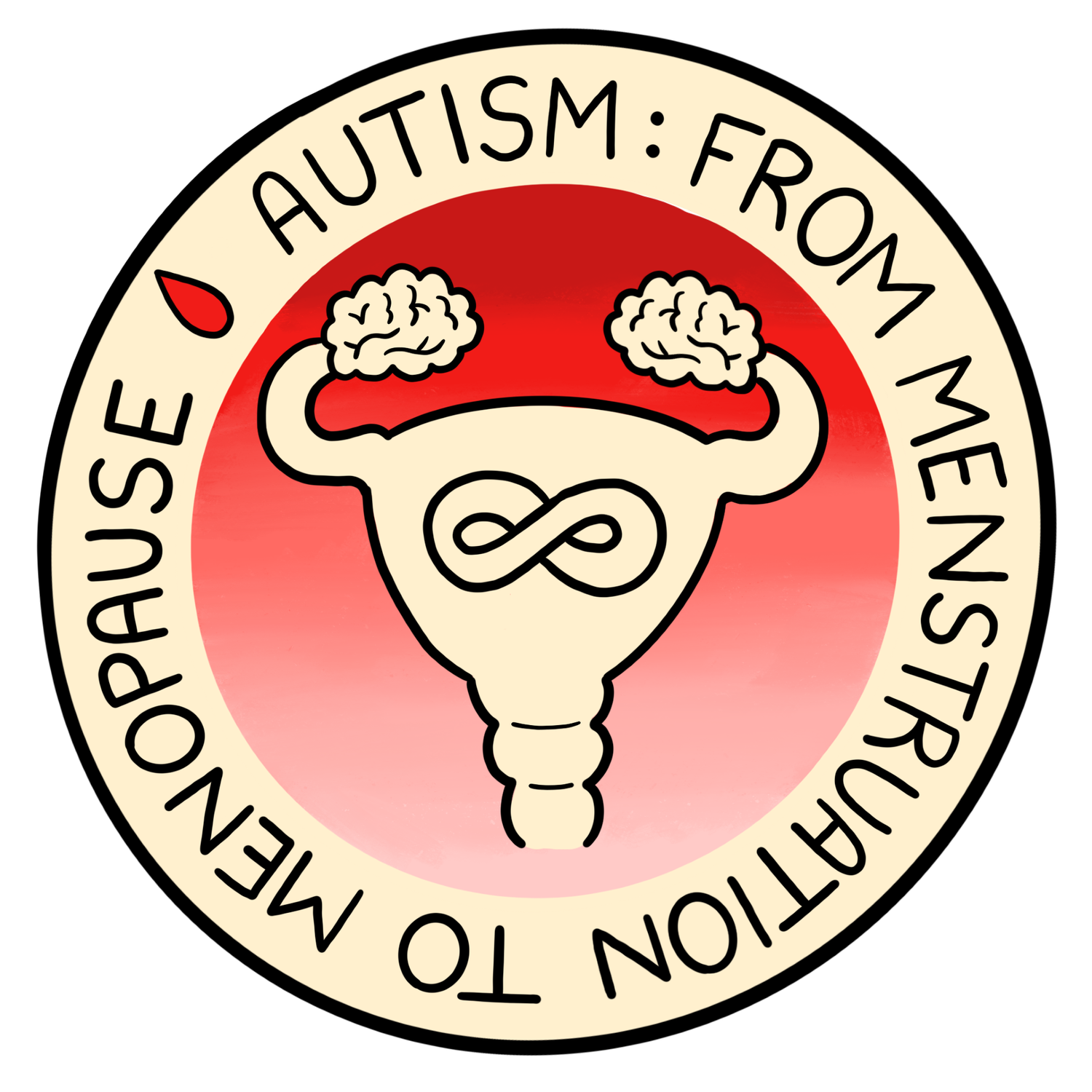
Red Silence: Autism, Chinese Culture, and Menstruation
By Hazel
The Weight of Cultural Silence
In traditional Chinese discourse, the female body is frequently mediated through the lens of "discretion"— a cultural imperative that effectively sanitizes and silences reproductive health. Growing up, menstruation was not a biological milestone to be understood, but a state of "uncleanliness" to be concealed. This cultural taboo constructs what I term "Red Silence": a systemic lack of vocabulary for bodily autonomy. For the Autistic individual, who already navigates significant challenges in decoding social nuances and internal stimuli, this silence is not merely a social preference; it is a clinical hazard. When a culture demands "discretion," it strips the neurodivergent person of the very language required to advocate for medical safety. Consequently, I navigated my early reproductive life in a state of perpetual unsafety, governed by a mindset of internalised fear.
The "Dirty" Taboo and Sensory Dysregulation
For many of the Autistic individual, sensory processing is an intense, constant negotiation with the environment. The onset of menses introduces a violent influx of sensory data: the tactile distress of sanitary products, the olfactory intensity of blood, the smell, and the systemic volatility of hormonal shifts. Within the quietly conforming hierarchies of Chinese culture, where women have historically occupied a lower status, physical pain is often framed as an inevitable burden to be endured in silence. I was never formally instructed on hygiene or management; I existed in a vacuum of information. I internalised stories of menstruating women sleeping in separate quarters or being excluded from rituals from movies or behaviour of the adults around me. This moralizing of a biological process transforms a sensory challenge into a moral weight. Because I lacked a counter-narrative, I normalised this suffering for decades, only beginning to dismantle these beliefs during my daughter’s puberty—a period that coincided with my own late Autistic discovery, which I mean, the courage of embarking onto my late-discovery has unfold many learnings, and started my selfcare and understanding my neuro and my body only after entering to my mid-age.
The Hegemony of "White-Centric" Research
Current Autism research suffers from an acute lack of diversity, predominantly centering on White, Western cohorts. This creates a data gap that ignores how culture dictates the perception and communication of pain. Linguistically, English provides a granular vocabulary for physical distress—throbbing, dull, acute, lancinating. Conversely, in many Chinese contexts, the broad term for "pain" (痛, tòng) must cover a vast spectrum of experience. When clinical tools and research forms rely exclusively on Western descriptors, the migrant experience is effectively lost in translation. For 40 years, I navigated a life without the framework of neurodiversity or a safe, culturally competent space to articulate my health. My heritage is not an "ancillary" variable; it is fundamental to understanding why modern healthcare systems fail to protect non-Western Autistic lives.
The Stoic Mask: A Crisis of Clinical Presentation
In the medical theater of the birthing room, I defaulted to the "Stoic Mask" This is a complex survival mechanism—a fusion of Autistic "shutdown" (a defensive retreat from sensory overload) and cultural conditioning that equates dignity with emotional restraint. Across three C-sections, this mask proved nearly fatal. During my second delivery, my outward adherence to instruction and calm demeanor led medical staff to assume stability. In reality, I was experiencing a catastrophic postpartum hemorrhage. One hour after delivery, it was discovered I had lost three liters of blood. Labor involves an overwhelming amount of data to process; without the linguistic tools to externalize my internal distress, I coped in total isolation. This is the lethal paradox of the Red Silence: an Autistic person may appear most "compliant" and "calm" exactly when they are in the greatest medical peril.
Perimenopause: The Second Sensory Storm
Now, as I navigate perimenopause—frequently described as a "second puberty"—the Red Silence has intensified. For the Autistic woman, hormonal transition acts as a catalyst for sensory hypersensitivity; noise and heat become increasingly intolerable. Yet, when I attempt to articulate the severity of my heavy bleeding or my sensory dysregulation, I am met with systemic gaslighting. Within some Chinese circles, perimenopause is treated with derision; I have been told that to admit to it is to admit one's "prime is over" and that such "secrets" should be guarded. Even when seeking professional help, I was told by a Chinese clinician that my experience was "impossible" due to my age. Being dismissed as "silly" while your nervous system is in a state of total chaos is a profoundly alienating experience.
Interoception and Cultural Misconceptions
A core feature of the Autistic profile is a difference in "interoception"—the neurological processing of internal bodily signals. Chinese cultural emphasis on "balance" (such as the hot/cold dichotomy) offers a unique framework for health, yet it can inadvertently mask acute medical emergencies. If a hemorrhage is dismissed as a mere "imbalance" of Yin and Yang, the window for life-saving intervention may close. We must bridge the gap between traditional health beliefs and neuro-sensory needs. Furthermore, the pervasive myths regarding menopause in Chinese circles—rooted in ignorance and stigma—make the intersection of neurodiversity and aging even more precarious. To speak of both is to enter a space of profound cultural friction.
The Pathology of the "Good Patient"
From a migrant background, I was socialized to uphold the "virtues" of the undemanding patient: quiet, polite, and compliant. However, in the context of Autistic medical distress, being a "good patient" is a dangerous performance. Western diagnostic criteria often rely on "typical" displays of pain—screaming, crying, or visible agitation. If an Autistic woman is in a state of internal shutdown, she will not provide these cues. I have often felt a sense of utter desperation when navigating the UK's complex medical systems, which were not designed for my voice or my processing style. This struggle is magnified tenfold for Chinese women facing language barriers, who suffer in a double-vacuum of cultural and linguistic exclusion.
A Call for Intersectional Research and Advocacy
The future of reproductive health research must be intersectional and inclusive. We must dismantle the "White-centric" model of Autism and actively incorporate the lived histories of those who have navigated the biological milestones of birth and menopause across cultural borders. By documenting my own trauma—from the loss of three liters of blood to the gaslighting of perimenopause—I am
advocating for a movement away from the "Stoic Mask." We must move toward a healthcare model that recognizes that "calm" is often a mask for crisis. Our stories are not merely anecdotal; they are essential data points in the quest to make reproductive healthcare safe, respectful, and accessible for the global Autistic community.